Friday, February 12, 2010

Architecting the Great Web


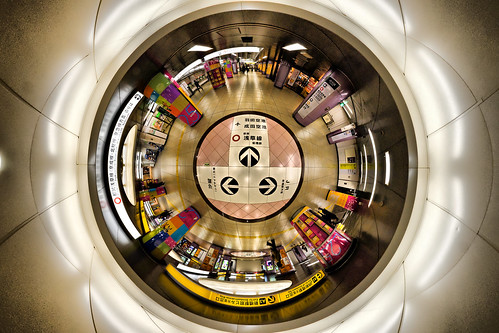
The nation-state is too big. It’s a behemoth. Even our large cities have ballooned to a size many times too big for a healthy, dynamic community at a human scale. These social monsters are just that: monstrosities. What’s more, they’re dinosaurs. The evolution of natural systems (such as unfortunate dinosaurs) gives us a clue of patterns of organization that are effective to a point, but beyond that become cumbersome. Clunky. Inefficient. And soon, extinct.

An evolving system has no other scheme but to test the stress limits of itself and its own boundaries. We’ve tested those boundaries with our nation-sized communities, and I posit that these entities are not proving to be optimal. We’re starting to become aware of problems in a nation 300 million strong; the huge bureaucracy of the United States is unable to attend to the basics of human welfare or the infrastructural basics we need from our government. More than a few thinkers are realizing that the U.S. Constitution is already cracking under the size of this country. While the American tradition of federalism (shared political/legal power between states and the national government) is one approach to localized governance within a larger whole, I believe even American states are too big to serve as a human-scaled governments.

While things are arguably too big already, political science is currently grappling with how our organizational institutions can “scale up” even larger to cope with apparently inevitable globalization. Despite the seeming paradox, I am actually optimistic that some form of global government is possible that can protect normatively good things such as localized diversity of thought, while establishing a baseline of order and standards of human decency worldwide. The question I am interested in is how natural systems theory can help us predict, or even help us architect a new global order in harmony with human-scale communities.

With the disclaimer of my somewhat broad, but certainly limited awareness of the various factors at play, let me describe what I predict will happen. It is impossible to guess when or how exactly the transformation will occur, but I think we will soon begin to forge new forms of local governance within a larger system that I’ll generically call the “web.” I believe local communities will reflect a shrinking back down to human size, and will possess the following characteristics:

-- less than 100,000 people
-- relative self-sufficiency
-- interconnectedness/interdependence with nearby communities (forming the overall web)

Like a scalable network, the interconnected communities will form a web eventually encompassing the entire face of the earth, and still retain a coherence or unity. The local communities/cities will self-govern, but will also be governed by the powerful, normative practices or customs of the web/multitude/network. These cities will be sovereign and autonomous, but the web will serve as the foundation, embodying and enforcing principles that sustain itself. Longevity and continuance will be bellwether, and the social organization that sustains over time will simply prevail. This living web of cities will display amazing diversity within a larger unified framework. McLuhan’s “global village” will manifest as a collective sphere of media and communication (underpinning the global political norms), but no singular culture will dominate as a hegemony. Some form of representative democracy will likely be central to both local and global levels of governance, but I believe the operative foundation will reflect some kind of peer-to-peer autopoietic organization as opposed to a top-down enforcement of “voting rights.” I realize this sketch is too vague at present to be of much use, but there are many thinkers who are expounding on these ideas right now, and I have faith that innovative models will soon be testable and employable, if they aren’t already being tested right now.

Like any natural system, this web will surely be attacked and challenged. But the web itself will respond naturally and effectively. Like cancerous tissue may grow and threaten to harm the body, cancerous agents may poison parts of the web. But, cut off from surrounding cities, the “cancerous” regions will not represent an extreme threat. Like a lone individual cut off from food and water, rogue cities will not long survive without the sustaining network around them. This stands in opposition to the current situation where large nations have enough resources to sustain destructive activity for a frightening long duration. Inter-community conflict resolution mechanisms will probably surface and ebb as needed, along with some form of intermittent Congress to help give form to the evolution of the basic “sustaining” principles of the web.

Compared to the current structure, the web of cities will respond better to nearly all stresses. Climate disasters, for example—a catastrophe for nations with closed borders—should be easily tolerated by a distributed network of communities that can absorb populations easily, dispersed across a region. Populations will be stabilized through the creation of planned sister-communities, seeded as necessary to prevent overcrowding.

Certainly a topic of such scope as I have addressed here entails consideration of many factors. This text represents merely my preliminary thoughts and predictions about our collective future, about a global social body that has yet to be born. I for one believe the birth is near at hand. To the extent that active midwifery may assist in this birthing, I welcome any comments and reactions as to how, beyond working to purify and enlighten ourselves as individuals, we may facilitate this evolutionary process.

February, 2010
Boulder, Colorado

Image from http://www.flickr.com/photos/kelloggphotography/, used under a creative commons license.

Friday, April 3, 2009

Diversity In Unity


According to Chris Bache's description of Robert Monroe's "interlife rings," the bardo region between life and death is a place where our souls can choose to associate only with others like ourselves, or with others at a similar level of development. Bache indicates that this stands in counterpoint to the physical plane where we live, where we are forced to interact with myriad, different beings. Thus, the diversity of physical life encourages faster development at the soul-level. In this way, would such an "interlife" be a kind of heaven with a dark side, akin to gated communities where people choose to be insulated among others just like themselves? This model indicates a back and forth between resting (in unity) and growth (through diversity). But is such a one-at-a-time model the only way of thinking about how diversity and unity interact?

Perhaps a more useful conception, especially as manifested in a conscious organism, is consciousness as unity and community. The diversity of unique thoughts, the diversity of experiences and emotions -- these can be conceived of as analogous to a society. The single neurons in a human brain that can never experience what it feels like to act as a coherent body nevertheless comprise an overall system which "transcends and includes" them. Aren't these neurons a form of community? Moving beyond the concrete biochemistry of the brain, Genpo Merzel builds on the "Psychology of Selves" theory as he seeks the communal intelligence of our different conscious "Voices" to help us integrate Dual and Non-Dual reality. And even from the point of view of the unified ego-consciousness of a single individual, the diversity of experience as we age reflects the shifting of emphasis of different voices or perspectives of our minds.

However you want to conceive of our discrete inner-selves or voices, one can imagine our inner landscape to function like the shifting currents of cultural views (and vice versa). Like a peaceful transition of political power, perhaps each coherent individual repeatedly transitions as different inner voices align and become prominent, thus transforming our "singular" identity. "I" and "We" at the same time. Diversity and Unity, together.

In the outside world as we typically think of it, diversity is something that must be actively sought out, and embraced as the vehicle for growth that it is. But coherence must also be sought. Homogeneity, or hegemony, is not an evil, unless it is blind. If we are to evolve into a loving, unified culture, certain coherence of principles must be attained. Homogeneity with openness is a strong, evolving coherence. I believe this to be our destiny: Diverse but Unified.

Monday, March 23, 2009

Collective Transparency


To me, Facebook is the leading edge of what is possibly the most evolutionary aspect of the web: the transparency of each of us and all of us.

Increasingly, people are signing on and donning a Facebook mask. This mask is seen not just by those one wishes would see it, but by anyone one accepts into one's circle. For most of us that means people who knew us as children, family, current friends, professional acquaintances, etc. No longer can the image you put forth into the world be so segmented. Now everyone sees the same pictures, the same likes/dislikes that you broadcast, the same political views, the same mask.

It's still a mask, but in my opinion, it's harder to obfuscate your true self to all these people who know different aspects of you. Thus, the mask probably tends to become more authentic of our true self, and perhaps we are encouraged to live up to the ideal we want the world to believe that we are.

The second aspect, and Facebook is just one piece, is the clearing house of the collective consciousness that is on display online. I believe that a collective mind is becoming transparent to an ever larger group of people, because we can see that we are experiencing and thinking things in sync. Leaving the mystical aspects of a collective mind to the side for one moment, I think it is a profound step for people to begin seeing themselves as part of this collective cultural force, instead of discrete atoms.

Saturday, February 21, 2009

The Nexus Age


Increasingly, there is a desire among those interested in human evolution to distance current visionary philosophies from the perceived airiness of what has been called "New Age" thinking. "New Age" has become a pejorative moniker for all that may be deficient about hippy culture.

The replacement label for this Era of Transformation is "Next Age," a concept that maintains a focus on becoming.

Neither is distasteful to me. However, as an even more evocative label for the current period I propose yet a different concept: "Nexus Age."

Nexus means "core" or "center." As Wilber and Gebser put forth, we are living in an Age of Integration. We are in the process of melding ancient and modern wisdom, matter and spirit. The irony is that attainment of enlightenment involves the reconciliation of Above and Below, of Now and Later. We are becoming increasingly aware that the future is not "better" than the present, that life Above is not "better" than life Below. Reality, and life, is a moving process. All stages of the process are in harmony, and this point of evolution is about an awareness of this harmony and process. This facet of truth is becoming transparent to our conscious minds, right now.

In the Nexus Age, humans exist fully in the present moment, aware that we are neither matter or spirit, but the nexus of both. We are neither becoming something different, nor are we only one particular form; we are at the nexus of both. Our conscious minds see through the process, and realize that Now, our future, our destiny, our potential is manifest and manifesting.

In the Nexus Age, we embrace that we are the meeting point of all dualities. Let's meet there now.


Image credit: "Disorientation" by heiwa4126, used under Creative Commons license.

Friday, December 12, 2008

Giftvesting


"Whenever you feel ‘short' or in ‘need' of something, give what you want first and it will come back in buckets. That is true for money, a smile, love, friendship."
~ Robert Kiyosaki


I like the maxim that the more you give, the more you will receive.

Thus, I tend to believe that by giving more to our children -- giving them better care as young individuals, giving more of them better education, giving them more love -- we will all reap more than we can imagine from this investment.

My only problem with the above is that, conceptually, the idea of "investment" is not equivalent to the idea of "giving." Investment is self-centered, and giving is other-centered. In this age of social-entrepreneurship, do we really not have a word that encompasses both the altruism of giving and the self-interest of investing? Doesn't our future as a collective entity require such a harmonious mixture of cooperation for OUR sake and for MY sake?

Perhaps we need a new word. Perhaps we don't have a word because we're not even thinking like this. Or maybe we're not thinking like this because we have no word.

While clever linguists can begin the work of co-creating/discovering a snazzier word, I'm planning to figure out how to start "giftvesting" in my fellow man, in whatever way I can, everyday.

Care to join me?


Image by Mr. Kris, used under a Creative Commons license.

Saturday, April 19, 2008

Life Design


If life is a work of art, does it not make sense to study the principles of design? To apply or hold the intention of using these principles in the creation of my reality?

It seems possible to broadly interpret, for life, the fundamentals of art:


Composition (how to organize, within parameters)

Format (creating with the available planes, surfaces, materials in mind)

Balance (assymmetry tends to be more interesting!)

Repetition (the beauty of plural experience)

Anomaly (celebrating some particular distinction)

Concentration (focusing on an area)

Economy (using only what’s necessary to achieve what’s desired)

Simultaneous Contrast (emphasizing difference by relation)

Scale (the beauty of the small and the large)

Negative Space (attention to what surrounds)

Metamorphosis (gradual change from one thing to another)

Gradation (the beauty in experience of spectrum or degree)

Emphasis (focus on a theme or pattern)

Focal Point (directing or compelling the observer’s attention somewhere)

Rhythm (the beauty in a repeating pattern, element or principle)

Variety (the beauty in difference)

Unity (wholeness or coherence)


While no single work of art will exemplify all principles, life need not necessarily be singular.

All of this is merely to offer a toast to Aesthetics -- a higher ordering of spirit I have finally caught glimpses of beyond the horizon of my usual vista of Utility.

Monday, March 31, 2008

Vegetable Garden and the City

In a small triangle of sunny dirt, in early February of this leap year, I began for the first time to grow sustenance.

There’s a tomato vine, spinach, broccoli, arugula, cabbage, onions, and butter lettuce. I water every few days as I come and go. Now, for two weeks I have been harvesting for salads and sandwiches.

I can’t quit paying the grocer just yet. But everything starts somewhere.

I don’t own the land, I rent it. Like all of us.

I didn’t make the plants, so I can’t take credit for the food. All I did was help. Just like we do with everything, or not.

Studying political theory, I encounter men telling us how we should all live. I don’t know of any philosopher that said each individual should learn to grow his own sustenance.

I’m not so sure about shoulds.

But I’m not sure we shouldn’t.